Q: I keep seeing the term “net impact carbs” on food labels. What does it mean?
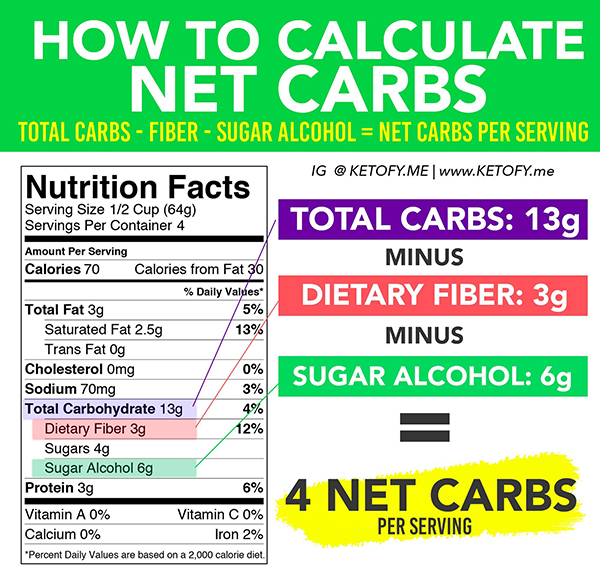
A:With the low-carb craze in full swing, “net impact carbs” has become a popular buzz phrase in many food products. Simply stated, the term refers to the amount of carbs in a product that promote an increase in blood sugar. Carbohydrate-based nutrients like fiber and sugar alcohols (also called polyols) are excluded from the number, since they have a negligible impact on glucose levels.
Why is this important?
Well, high blood sugar levels cause the pancreas to secrete insulin in large amounts. Insulin is a storage hormone. While its primary purpose is to clear sugar from your bloodstream, it’s also directly responsible for converting sugars into body fat, as well as inhibiting the conversion of stored fat into energy. Theoretically, by limiting the carbohydrates that increase blood sugar levels, you can minimize the deleterious effects of insulin and promote better weight management.
But before you buy into the “net impact carb” phenomenon, consider these facts.
First, while it’s true that spiking blood sugar levels is detrimental to staying lean, trying to determine how much a particular carbohydrate will spike insulin isn’t a cut and dried issue. Foods aren’t consumed in a vacuum. Unless you’re eating a “pure” carbohydrate food that contains no other types of nutrients, then the glycemic capacity of the carb will be altered during the course of a meal. Adding protein and/or fat to the mix delays gastric emptying, thereby blunting the insulin response.
More importantly, looking only at the “net impact carb” amount makes it seem as though the “non-glycemic” carbs are irrelevant to weight gain.
Realize that calories do count, regardless of their nutrient composition. The first law of thermodynamics states that if you consume more calories than you expend, you’ll gain weight. It doesn’t matter whether the calories come from protein, carbohydrate or fat: Eat too much and you’re sure to pack on the pounds.
Now, there is a caveat to this: The human body isn’t able to fully absorb sugar alcohols (such as maltitol, mannitol, sorbitol, Xylitol and HSH) and thus, they are not as calorically dense as other carbohydrates. They contain between two to three calories per gram as opposed to the four calories per gram in glucose, fructose and galactose.
Still, they do have calories and thus, will impact body fat if consumed in abundance.
The bottom line is that “net impact carbs” are but a small piece to a very complex nutritional puzzle. Using them as the only yardstick when choosing a food source is shortsighted. You would be best served to look at the complete nutritional profile of the product, taking into consideration all the elements of its composition.
Original Article