
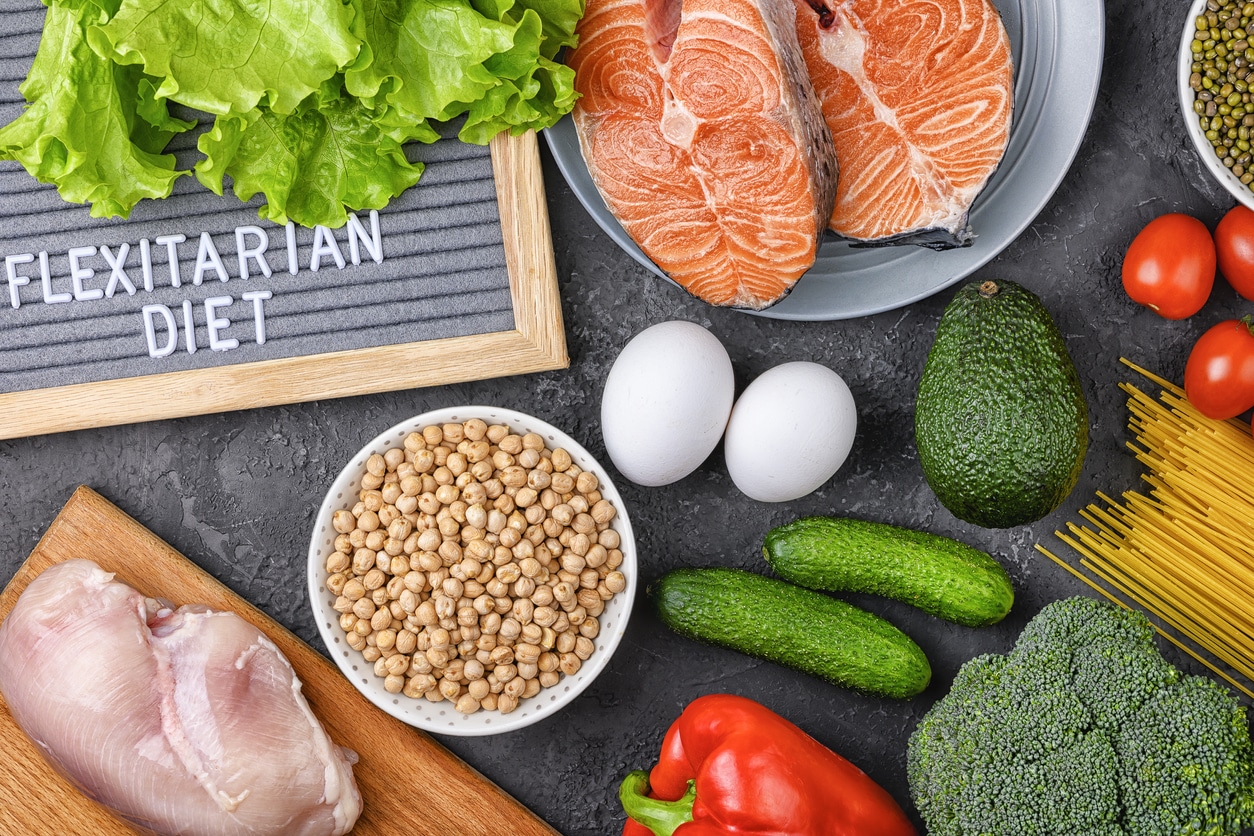
Each year, U.S. News releases its report on the best diet for the year, and once again, the flexitarian diet was near the top of the list for best diets overall. It was just edged out by the popular DASH diet and is still close to the number 1 option, the Mediterranean diet. Additionally, it ranked in the top three for easiest-to-follow, gut health, inflammation, and other categories.
Not only is this a simple daily diet, but it is also exceptionally easy to adjust to consider other dietary needs. As there are no specific specialty ingredients required, it also tends to be less expensive than more restrictive dietary plans.
What Is the Flexitarian Diet?
The word flexitarian is a mash-up of the words flexible and vegetarian. It’s used to describe the diet of an individual who eats mostly plant-based foods but allows themselves the flexibility to eat meat occasionally. It’s also sometimes referred to as a semi-vegetarian or casual vegetarian diet.
It is a relatively new category of diet recently popularized by registered dietician Dawn Jackson Blatner in her book The Flexitarian Diet.
While the term “flexitarian” has been in use since the late 1990s, it gained popularity in the early 2000s. Blatner’s book on the subject was the first to provide readers with clear instructions on maximizing the benefits of the diet. As described by Blatner, the flexitarian diet emphasizes the health benefits of a diet higher in vegetables, legumes, and whole grains, but is less restrictive than a vegan or vegetarian diet.
Recommendations over Rules
One of the greatest advantages of the flexitarian diet is its flexibility. It doesn’t have any precise rules.
No specific food or category is off-limits, and there are no times that are off-limits for eating. Calorie counting only applies if you are trying to lose or gain weight. However, many suggestions and recommendations are available on how to use the principles of a flexitarian diet to improve your health through the food you consume.
A flexitarian diet is more of a lifestyle choice than a weight-loss diet. However, adopting the semi-vegetarian principles that follow can lead to shedding excess fat over time, especially when chosen over a non-vegetarian diet.
This is due to several factors. A flexitarian diet tends to be lower in saturated fats and processed foods than a non-vegetarian diet. It also has a higher fiber content due to the inclusion of more beans, nuts, and seeds as protein sources.
DJ Blatner considers there to be three levels of the flexitarian diet. The beginner level starts at just two meatless days per week, while the advanced level flexitarian limits their meat intake to three or four days a week.
Flexitarians at the expert level spend at least five out of seven days without meat. This makes it easier to ease into the diet without feeling deprived.
Selecting Meats
When selecting and cooking meats to incorporate into your flexitarian diet, nutritionists offer several suggestions for making healthy choices. These include:
- Choose leaner cuts
- Consider grass-fed, free-range, and organic meats
- Eat less red meat
- Eat more seafood
- Limit or avoid processed meats
- Remove the skin
- Watch your portions
The Complex Carbs Conundrum
Replacing meat with sugars and complex carbohydrates places a high metabolic load on the body, leading to chronically elevated blood sugar levels. Eating excess carbohydrates, especially complex carbohydrates, can lead to a host of physical maladies, including:
- Acne
- Bloating
- Constipation
- Cravings
- Decreased mental acuity
- Dental cavities
- Energy crashes
- Heart disease
- High cholesterol
- Type 2 diabetes
- Weight gain
Proponents of this diet are quick to state that new adopters should be cautious about replacing meat with too many sugars or complex carbohydrates.
The goal is to increase the proportion of the diet that comprises healthy, nutrient-rich vegetables, whole grains, beans, nuts, and seeds. This helps to increase dietary fiber, improve gut health, and reduce inflammation.
Considerations
Due to its flexibility, the flexitarian diet has very few drawbacks, but no nutritional plan is perfect for everyone. The primary consideration with a flexitarian diet is ensuring you get all the vitamins and minerals you need, even at the expert stages. Nutritional deficiencies can be countered by adding slightly more meat to the diet, incorporating more plant-based foods rich in the deficient nutrient, or utilizing supplements.
Other Limited Meat Diets
Although the flexitarian diet has received a lot of press lately, it isn’t the only plant-based diet that includes meat.
The reasons for choosing one of these diets are many and can include animal welfare, environmental impact, allergies or sensitivities to meats, or general health benefits.
Demitarian and Reducetarian
Reducetarian and demitarian diets are similar in nature to the flexitarian diet, as they are mostly plant-based, with the occasional inclusion of meat. Both diets focus more on environmental impact and animal welfare than on the dieter’s health.
Pescetarian
People who adhere to a pescatarian diet incorporate fish and seafood into an otherwise vegetarian diet, while consuming no other meat products.
Pollotarianism
A vegetarian diet with the addition of poultry meat, but no other meats, is called pollotarianism.
In Summary
A flexitarian diet encourages people to eat primarily plant-based foods while allowing them to occasionally incorporate meat into their meals. This dietary choice promotes personal health and well-being, animal welfare, and environmental sustainability. Overall, it provides a healthy and practical alternative for individuals who wish to adopt a plant-based lifestyle but struggle with the limitations of a vegetarian or vegan diet.
Read More:
All You Need To Know About the Elimination Diet
Everything You Need to Know About the GOLO Diet
The Optavia Diet: Does it Work?
Disclaimer: This story is auto-aggregated by a computer program and has not been created or edited by evesfit.
Publisher: Source link