
Image
Dialogue
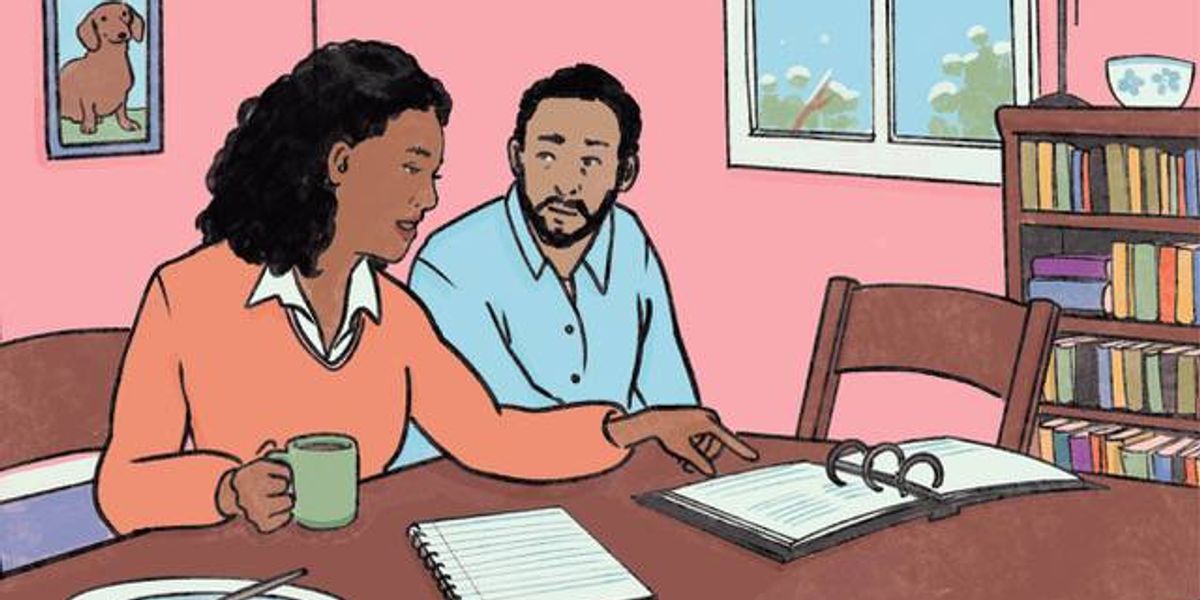
Polly and Pete sitting at a dining room table.
Pete has an open binder in front of him.
Polly has a notebook in front of her and she has a pen in her hand.
Polly: We’ve got your list of medications and medical records in the binder. Now let’s write down any questions we have about your prostate cancer diagnosis for your appointment.
Pete: OK, good idea.
Notebook page with questions on it
Questions caregivers may want to ask the HCP:
What treatments are available?
What side effects can we expect?
Can Pete work during treatment?
How do we contact you if we have questions?
Will I be able to care for Pete or will we need in-home help?
SUPER: The next day …
Pete and Polly are sitting in the doctor’s office across from a desk. Polly has the notebook in her lap and her smartphone. They are enjoying each other’s company.
Pete: Thanks for coming with me, Polly.
What would I do without you?
Polly: You wouldn’t have remembered the notebook, that’s for sure.
The doctor enters the room and shakes hands.
Doctor: Nice to meet you both.
Pete: I’m Pete.
Polly: I’m Polly, Pete’s partner.
Doctor’s office
Polly: Do you mind if I record our conversation? I know we’ll be going over a lot of important details, and I don’t want to miss anything.
Doctor: Sure! That’s fine with me.
Doctor’s office
Doctor: Pete, I see that we found your prostate cancer during a routine screening. Tell me, are you experiencing any symptoms like frequent urination?
Pete: I don’t think so.
Thought bubbles over Polly of Pete getting up to go to the bathroom during the night (or maybe light under the door of the bathroom?)
Polly: Well, you have been getting up during the night lately.
Pete: Oh you’re right … I didn’t think about nighttime.
Doctor’s office
Doctor: It’s always good when the people around us notice things we don’t, so I’m glad you’re both here and we can work together as a team.
Now, let’s go over your treatment plan.
Pete: Great! We also brought a list of questions we have for you.
SUPER: A week later …
Polly and Pete’s house: Polly and Pete are sitting on the couch. The binder and the phone are on the coffee table.
Polly: I updated your medication list with room to jot down any symptoms.
How are you feeling today after treatment?
Pete: I’m really tired. Do you think I should be concerned?
Polly looks at her smartphone.
I think I remember the doctor talking about fatigue … let’s check the recording.
Smartphone playing a voice memo
“Fatigue is a common side effect of the treatment …”
Polly and Pete at the table
Pete: Thanks, that makes me feel better.
Polly: I’ll write it down, and we can bring it up with the doctor if it continues.
A week later …
Doctor’s office
Doctor: How are you feeling, Pete?
Pete: I’ve been really tired since I started treatment.
Doctor: Well, feeling tired is a common side effect.
Doctor’s office
Pete: Polly kept a log and found the fatigue lasts most of the day but is most intense in the afternoon.
I’m still exercising and eating — but the fatigue is really affecting my ability to work.
Doctor: Ah, I see. Thanks for letting me know that it’s impacting your everyday life. Let’s try adjusting your medication, and if that doesn’t work, we can try a new one.
Doctor’s office
Pete: That sounds good to me.
Polly: Thank you for listening to our concerns.
Doctor’s office
Doctor: Of course! Good communication helps me help you.
End bar
Caregiver Communication Tips:
Write down questions you have before the appointment.
Take notes or record the office visit.
Be clear and concise about your concerns.
Ask the HCP to clarify anything you don’t understand.
Record and share all physical and mental side effects of treatment.
Establish contacts for follow-up questions and emergency situations.
For more information, please visit HealthyWomen.org
Disclaimer: This story is auto-aggregated by a computer program and has not been created or edited by evesfit.
Publisher: Source link