
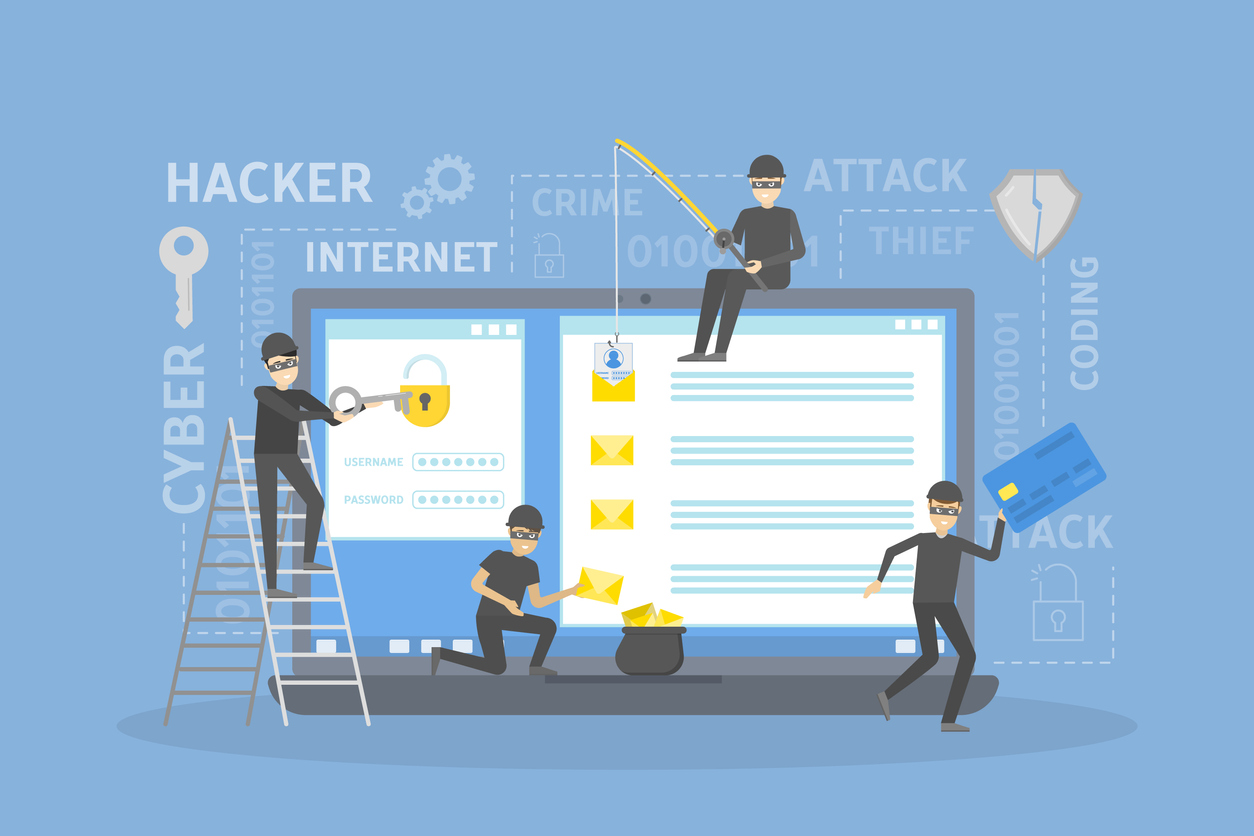
Scammers are getting smarter and more dangerous with the rapid acceleration of artificial intelligence and other powerful tools. At Prime Women, we believe women over 50 defy the usual stereotypes. We’ve adapted to more new technology than any other generation. But nobody is immune to getting scammed and taken advantage of.
Nowadays, even young people who were practically raised on their cell phones are regularly entrapped by elaborate schemes and AI pictures, videos, and voices.
Altogether, citizens of the U.S. lose over $100 billion a year to scams. The impact is devastating for individuals and their families. As of the most recent reports, several prevalent scams are particularly impacting senior citizens, exploiting their goodwill, lack of tech-savviness, loneliness, and even targeting people with dementia.
To avoid getting scammed in the digital age, Prime Women have to do what we’ve always done: learn, adapt, and overcome. Read more to learn about common scams and how to avoid them — including ones that my own friends and family have fallen for!
Tech Support Scams
With the increasing reliance on technology, seniors are often targeted with fake tech support scams.
Fraudsters impersonate reputable companies like Microsoft or Apple, claiming that the victim’s computer has a virus or security issue.
Recently, a friend of mine nearly fell for this exact scam and almost lost $25,000. She received a pop-up message on her computer saying there was an issue and that she needed to call Microsoft tech support. She dialed the mysterious number provided in the pop-up. Her husband wasn’t home, so she figured she’d let the “tech support” people help her out.
At first, she gave them personal information and even granted them remote access to her computer. But when they suspiciously warned her not to hang up the phone and not to call her bank, she realized it was a scam. She hung up and called her bank directly, just in time to stop the scammers from transferring money out of her account.
These tech support scams will often start with a text message, phone call, or computer pop up. It will claim that there is some sort of update or issue that needs to be taken care of.
They then convince seniors to provide their personal information, bank account information, or even grant remote access to their devices. They may also convince seniors to pay for unnecessary tech support services. This not only results in financial loss but also compromises sensitive personal information.
Remember, if you are unsure if a text or phone call is actually coming from an official source, do not click on any mysterious links or provide them with any personal information. Hang up the phone and pull up the real company’s official website or phone number.
Social Security Scams
Scammers often pretend to be from the Social Security Administration, claiming that there’s a problem with the senior’s benefits or that they need to verify personal information.
They may threaten to suspend benefits or issue arrest warrants if immediate action isn’t taken. This preys on seniors’ fear and trust in government agencies, leading them to disclose personal details or send money to fraudsters.
There are other similar scams like this, where fraudsters pretend to be the police, the sheriff, or even the FBI. They claim you have made some sort of infraction or violation and demand that you pay a “fine.” The fraudsters will often demand you to pay the fine via unconventional methods such as gift cards, crypto currency, or crypto ATMs where the money can never be traced or returned.
Like I said above, if you are unsure whether a text or phone call is actually coming from an official source, just hang up! Pull up the official website and phone number — whether it be the Social Security Administration, the police, or the FBI — and ask them about the issue yourself.
If anyone is ever requesting unusual and unconventional payment methods, then it is more than likely a scam (especially crypto).
Grandparent Scams
This emotional scam involves fraudsters posing as grandchildren or someone claiming to represent them, often in distressing situations like accidents, legal trouble, or even ransom. They then request immediate financial assistance, exploiting seniors’ love and concern for their family members. Despite the urgency, these requests are often part of an elaborate scheme to extract money without any real emergency.
For example, my sister-in-law recently received a phone call. It played a message that sounded like it was coming from the county jail!
It said that her brother had been arrested, and requested her to post bail. She was incredibly frightened at first, until she realized there was no way her brother could be in the county jail because he lived a state away! The scammers were simply trying to extract money from her with a fake bail scheme.
Other scams are more convincing and terrifying. Some fraudsters will steal photos of your loved one off the internet and use them to create AI-generated images of them in an accident, in jail, or being kidnapped.
It can be hard to tell if an image is AI generated. Zoom in. Look closely at the facial features. Is their face, hair, or body different?
Are there any tattoos or piercings that could identify a real photo from a fake one?
Romance Scams
Seniors, especially those who are widowed or divorced, are vulnerable to romance scams where fraudsters establish fake romantic relationships online. Over time, they gain the trust of their victims and then request money for various reasons such as medical emergencies, travel expenses, or investments. These scams can result in significant financial losses and profound emotional distress.
I know one man who lost millions to what is called a “pig-butchering” scam. This was both a romantic scam and an investment scam.
The fraudster stole images from other women online and also used AI generated images and videos to build a long-term romantic relationship online. They even called on the phone, in which the scammer was presumably using an AI generated voice. After many months, the fraudster convinced him that “she” could invest his money on his behalf and grow it substantially. “She” showed him, via screenshots and step-by-step instructions, how to set up accounts on Cashapp and Paypal to purchase crypto-currency.
Theoretically, he could have held onto that crypto himself or invested it himself. However, he trusted this “romantic partner” to smartly invest it for him.
The scammer gave him a code to transfer the currency to an investment account — but it wasn’t an investment account at all. The code transferred directly to the scammer’s crypto-wallet. Then the scammer created an entire fake website with a personal login for the man to make it appear as though he had an investment account with a ton of money that was rapidly growing. By convincing him that the investment was working, the scammer convinced him to “invest” more and more money over time.
But everything from the romantic interest, to the investment account, to the website was fake.
Healthcare Fraud
Seniors are targeted with fraudulent schemes related to healthcare, including fake medical products, services, or insurance plans. Scammers may offer bogus health supplements, medical equipment, or even fake COVID-19 treatments, exploiting seniors’ health concerns and desire for affordable healthcare solutions.
Education and awareness are crucial to combating these scams. Organizations and authorities need to provide resources and information to help seniors recognize and avoid falling victim to these schemes. Additionally, caregivers and family members play a vital role in monitoring seniors’ financial activities and providing support to help them navigate the complexities of the digital world safely.
By staying informed and vigilant, seniors can protect themselves and their families from falling prey to these harmful scams.
Scams Require Clever Perpetrators
Scammers are usually very clever people who would rather trick the rest of us out of our hard-earned and carefully saved money than work for an honest living. To better fool us, they invest a lot of time, effort, creativity, and technology into their scams. You don’t have to be dumb to be scammed.
Sometimes, these scammers are even being extorted themselves. In countries like Myanmar, there are secretive compounds in lawless border regions where thousands of people are human trafficked, abused, and forced to spend their days on a computer scamming people around the world. The victims are given financial targets, and if they don’t steal enough money, they face abuse by the higher-ups.
All of those stolen funds go to large crime syndicates.
So yes, there’s an entire evil industry out there trying to scam people! You have to be on the defense against the constant bombardment of scam calls, texts, emails, and pop-ups.
Below are some more true stories of actual people who became involved in scams. The details have been changed to protect the vulnerable. Remember that these are only examples, and today’s or tomorrow’s cons may contain new and terrifying twists.
More True Stories About Scams
Ransoms
The first example occurred in Canada.
A woman received a call saying that police were holding her husband and that she would never see him again unless she immediately sent $30,000. She was not to call the police since they were the ones holding her spouse. She panicked. Otherwise, she would have realized that Canada operates under the rule of law.
The police are on our side and do not kidnap people.
She immediately sent the $30,000. The fund transfer was successful, but the scammers told her that it had not gone through and that she should resend it. So she sent another $30,000. She was in the middle of sending $30,000 for the third time when her husband walked in the door.
Phishing
The second example involves a phishing expedition: when messages are sent from a supposedly legitimate source to extract valuable data like banking information or credit card numbers.
In this case, the message appeared to come from a major phone company. The woman who bit was not your usual victim. She was the recently retired head of a very large, respected organization. However, she had just spent a lot of time and effort installing services from that same phone company, and the scam email appeared legitimate.
It was only after she had input far too many personal details that she realized this was a scam and stopped — but by then, she was already faced with changing all the card numbers, etc., that she had already sent to the scammer.
Pre-Payment for Services Scams
The third is a lovely example of a very specialized scam. It is aimed at marriage commissioners (MC), the officials who perform civil weddings. An MC was booked for a wedding as usual, and she requested her normal small fee. The scammer then told a story about how a wealthy friend was paying for a good chunk of the wedding but only wished to write one check.
Would the MC take and deposit this large check and give the wedding planner a check for the balance after deducting her fee?
In this case, the MC would not, so the only thing she lost was a booking for an actual wedding in the time slot she had held for the scammer. Others, wishing to be nicer to the scammer and do him a favor, lost thousands when their own check to the scammer was cashed and the check they had received bounced.
False Inheritances
Then there are all the old tried and true scams that are still out there because they still work. You have just won/inherited a lot of money, and we just need a few dollars and your banking information to send it to you.
Or, your grandchild is in jail and needs bail, or your mother is in the hospital and needs medical care. Maybe it is something as minor as a not-quite-legitimate online retailer who takes your money and never sends what you thought you had ordered.
The list goes on and on regarding false claims you might face one day.
8 rules to avoid being the next patsy:
- Never get involved in a transaction that you did not initiate. This is the first and most important rule and could well save your family fortune.
- If it sounds too good or too awful to be true, hang up or delete it. In the very remote case that it is legitimate, someone will get back to you.
- Detach if you are asked for money or personal information.
- If in doubt, verify. The victim in our first example could have saved a lot of money simply by dialing her husband’s phone. Do not believe that you have to act this instant. Even if a person is in jail or the hospital, an hour will not make a difference, and you can check things out in a few minutes.
- Ask for information the caller should have. Your bank will have your account number. If they ask you for it for verification, ask them to tell you, and you will advise them if it is correct.
Also, anyone who has seen your grandchild will know how old and how tall he or she is.
- Do not use any links or phone numbers a possible scammer might give you. They could be a setup. Instead, call your bank using the emergency number on the back of your credit card or ask a search engine to take you to the official website of an organization for contact information.
- To verify, use a different phone or another mode. Clever phone scammers might ask you to call the police. You hang up, but they do not, so your call to them is not disconnected. When you pick up your phone, they play a recording of a dial tone and then pretend to be the police.
- Finally, be on your guard for all the bright and unexpected ideas scammers have yet to come up with.
They’ll go to endless lengths to try and part us from our funds.
Read Next:
15 Money-Saving Tips for Grocery-Shopping
Protecting your Retirement Finances in Uncertain Times
Conquer Your Fear of Failure in 3 Easy Steps
Disclaimer: This story is auto-aggregated by a computer program and has not been created or edited by evesfit.
Publisher: Source link