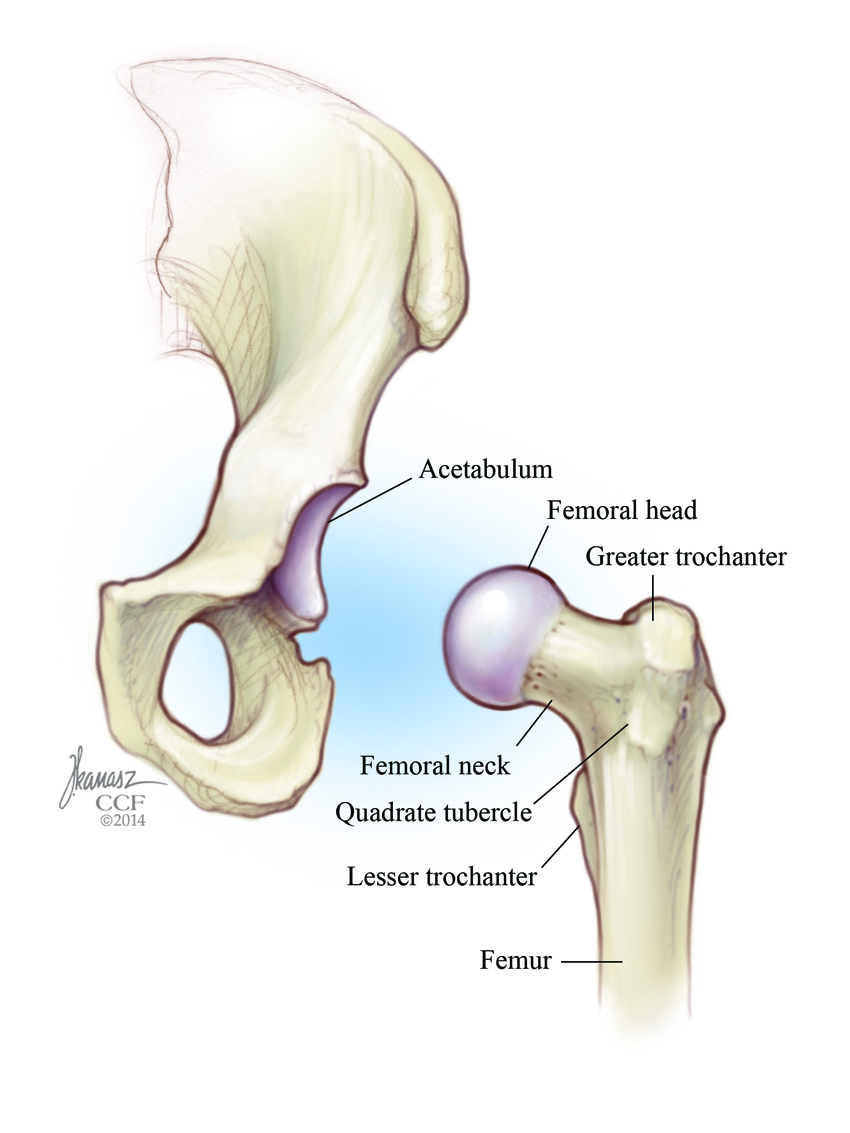
FAI is a pathomechanical process in which abnormal-contact stresses between the ball and socket cause joint damage around the hip, predisposing the patient to osteoarthritis and labral degeneration. FAI-related pain may be felt in the groin, in the low back, around the hip and sometimes in the thigh.
Who is at risk?
FAI is common in high level athletes, but also occurs in active individuals. While either type of impingement can occur in women at any age, most frequently the Cam type of impingement tends to affect women in their 30s and 40s who are athletically active. Sports associated with FAI include Martial Arts, Ballet, Cycling, Rowing, Golf, Tennis, Soccer, Football, Ice Hockey, Baseball, Lacrosse, Field Hockey, Rugby, Water Polo, and Deep squatting activities such as power lifting.
Symptoms
There may be no pain or symptoms
- Pain or aching (usually located at the inner hip, or groin area), usually after walking, or prolonged sitting (such as in a car)
- A locking, clicking or “catching” sensation within the joint
- Pain sitting for long periods of time, like in a car
- Difficulty putting on your socks and/or shoes
- Difficulty walking up hill
- Low back pain.
- Pain at the SI (sacroiliac joint on back of pelvis), the buttock, or greater trochanter (side of hip).
- It is often confused with other sources of pain, such as hip flexor tendinitis, pain from the back (disc or spine), testicular pain, sports hernia.
Exercises that should be avoided when training with FAI:
- deep squats
- exercises that involve excessive hip flexion with internal rotation or hip flexion with external rotation
- plyometrics, particularly box jumps
- any exercises that causes pain
Suggestive Exercises:
According to Chris Gellert, both a physical therapist and a personal trainer, therapist should focus on lengthening tight musculature and then stabilizing weaker phasic musculature (glutes, hamstring and core).
He further adds, begin with single plane exercises, horizontal leg press, leg curls, hip extension, building up to biplanar axis exercises, such as diagonal reverse lungeand diagonal forward lunge, to challenge the nervous system.
Progress further to compound exercises, such as mini-squat with mid row, reverse lunge with overhead medicine ball chop, and forward lunge with trunk rotation holding a medicine ball.
Note: Exercise choice and type of equipment will depend on the patient’s experience with exercise, her body type, goals and whether or not the client has had surgery.
Disclaimer
The Content is not intended to be a substitute for professional medical advice, diagnosis, or treatment. Always seek the advice of your physician or other qualified health provider with any questions you may have regarding a medical condition.Original Article