
By Linzi Martinez, CPT, INHC, BA
One of the greatest surprises of getting older is discovering that life after 40 can actually be better than what came before it.
Somewhere between the wisdom we have gained, the challenges we have overcome, and the confidence we have earned, many women begin to see themselves differently. We become less interested in perfection and more interested in feeling strong, energetic, capable, and fully alive.
There is a freedom that comes with this stage of life. We know ourselves better. We value our time more.
And perhaps most importantly, we begin to understand that our bodies are not meant to be pushed harder forever. They are meant to be supported intelligently.
Yet despite this wisdom, many women find themselves facing a frustrating reality: the things that used to work no longer do.
The cardio routines that once delivered results suddenly seem ineffective. Recovery takes longer. Energy feels different.
Belly fat appears more easily. And despite exercising regularly, the results often do not seem to match the effort.
If this sounds familiar, you are not imagining it.
Your body is changing.
The good news is that understanding those changes can be one of the most empowering things you ever do for your health.
After 40, the body has different needs than it did twenty years ago. Hormones shift, muscle mass naturally declines, insulin sensitivity changes, and stress often becomes a bigger factor. As a result, the old approach of simply doing more cardio is no longer the most effective path forward.
That is why the rules of cardio change after 40.
The goal is no longer to burn as many calories as possible.
The goal is to preserve muscle, support metabolic health, protect bone density, improve insulin sensitivity, and create the energy needed to fully enjoy the years ahead.
And that requires a different approach…one built around walking, strength training, and metabolic workouts.
Why Your Body Changes After 40
One of the biggest misconceptions in fitness is that the body you had at 25 should respond the same way at 45, 55, or 65. It will not, and that is perfectly normal!
As women move through their forties and beyond, several important physiological changes begin to occur. Estrogen gradually declines, affecting fat storage, insulin sensitivity, energy levels, recovery, and muscle maintenance. Growth hormone production naturally decreases, making it more difficult to build and preserve lean muscle mass.
Testosterone, often thought of as a male hormone but incredibly important for women as well, also begins to decline. This can affect strength, metabolism, motivation, body composition, and overall vitality.
At the same time, life often becomes more demanding. Careers are thriving, children may still need support, aging parents may require care, businesses are growing, responsibilities increase, and stress accumulates. All of these factors can contribute to elevated cortisol, the body’s primary stress hormone.
When cortisol remains elevated for extended periods, it can contribute to abdominal fat storage, increased cravings, insulin resistance, muscle loss, fatigue, poor sleep, and slower recovery.
Add declining hormones to an already stressed system, and suddenly the strategy that worked twenty years ago begins to fall apart.
The problem is not that your body is failing. The problem is that most women are still following fitness advice designed for a different stage of life.
At 25, your body could often get away with almost anything.
At 45, your body demands strategy.
And thankfully, strategy beats struggle every single time.
Why the Old Cardio Rules No Longer Work
For years, women were told that more cardio was the answer. If weight loss stalled, the solution was usually to spend more time on the treadmill, take another class, run farther, or burn more calories.
For some women, that approach worked when they were younger. But after 40, success is no longer determined by calorie burn alone.
What matters now is whether exercise helps preserve muscle, improve insulin sensitivity, support bone health, enhance recovery, maintain mobility, and improve long-term metabolic health.
This does not mean cardio is bad. Walking, hiking, cycling, swimming, and other forms of cardiovascular activity remain important for heart health, circulation, endurance, mood, and longevity. The problem begins when cardio becomes a constant pursuit of exhaustion rather than a tool for health, especially because excessive exercise stress can contribute to elevated cortisol, poor recovery, fatigue, and stubborn abdominal fat.
That is where the new rules begin. Instead of relying exclusively on calorie burn, women over 40 benefit most from a strategic combination of walking, strength training, and metabolic resistance workouts.
Together, these forms of exercise help support cardiovascular health, preserve lean muscle, strengthen bones, improve blood sugar regulation, and create a body that functions better for years to come.
And if there is one factor that influences nearly all of those benefits, it is muscle.
The New Goal: Preserve and Build Muscle
Preserving Muscle: The Real Goal After 40
If there is one thing every woman should prioritize after 40, it is preserving lean muscle mass.
For years, women focused almost exclusively on the scale, measuring success by weight loss alone. But the scale does not tell you how much of your body is muscle, how much is fat, or how well your body is functioning.
That is why the conversation after 40 must shift from weight loss to body composition. The goal is not just to weigh less. The goal is to preserve and build lean muscle while reducing excess body fat.
Muscle is far more than something that helps us look toned.
It is one of the body’s most metabolically active tissues and plays a critical role in healthy aging. It supports strength, balance, mobility, posture, joint stability, and independence.
After 40, preserving muscle becomes even more important because age-related muscle loss can accelerate if it is not addressed. As muscle decreases, strength, metabolism, balance, and physical function often decline as well.
This is also why relying on traditional cardio alone is not enough. Cardio can support heart health and calorie burn, but it does not provide the same muscle-preserving stimulus that strength training does.
After 40, women need exercise that protects lean muscle, not just exercise that burns calories.
Muscle also plays a major role in glucose management and insulin sensitivity. Every time muscles contract, they help pull glucose from the bloodstream into muscle cells, where it can be used or stored for energy. In many ways, muscle acts as one of the body’s largest glucose reservoirs.
This becomes especially important after 40, when insulin sensitivity often begins to decline. Reduced insulin sensitivity can contribute to increased fat storage, energy fluctuations, cravings, and difficulty losing weight.
The more healthy muscle tissue you maintain, the better your body can utilize carbohydrates and regulate blood sugar.
One of the most effective ways to improve insulin sensitivity is surprisingly simple: use your muscles. Every squat, lunge, push-up, and strength-training session helps your body become more metabolically efficient.
This is why strength training becomes so powerful after 40. It does not simply change how your body looks. It improves how your body functions.
When women focus on building and preserving muscle, energy improves, daily activities become easier, blood sugar regulation becomes more efficient, and strength and confidence grow.
The scale may still matter, but it is no longer the whole story.
The real goal is building a body that will support you for decades to come.
And muscle is one of the most valuable investments you can make in that future.
Why Strength Training Changes Everything
If preserving muscle is one of the most important goals after 40, then strength training becomes one of the most important tools available to help achieve it.
For many years, women were told to focus primarily on burning calories.
Strength training was often viewed as something reserved for athletes, bodybuilders, or younger individuals looking to build muscle. Today, we know much better.
Strength training is one of the most powerful forms of exercise for healthy aging.
Every time you challenge your muscles against resistance, whether through bodyweight exercises, resistance bands, machines, or free weights, your body receives a signal to preserve and strengthen valuable lean tissue..
One of the greatest benefits of strength training is that it helps slow and even reverse the age-related loss of muscle mass that occurs over time. Rather than accepting weakness, declining function, and reduced energy as inevitable parts of aging, women can actively build a stronger, more capable body at any age.
Strength training also provides benefits that extend far beyond muscle.
After menopause, women can lose bone density at an accelerated rate due to declining estrogen levels. This increases the risk of osteopenia, osteoporosis, fractures, and loss of mobility later in life.
Strength training and progressive overload are among the most effective tools available for helping maintain bone strength and reduce this risk.
Every time you challenge your muscles against resistance, you also place healthy stress on your bones. In response, the body adapts by helping maintain and strengthen bone tissue. Strong muscles help support strong bones, creating a foundation for long-term mobility, independence, and quality of life.
Progressive overload is a term often used in fitness, but its meaning is quite simple. It refers to gradually increasing the demands placed on the body over time.
This could mean adding a few pounds to a dumbbell, performing additional repetitions, increasing resistance, or progressing to a more challenging variation of an exercise.
The goal is not to lift the heaviest weight possible.
The goal is to become a little stronger than you were yesterday.
Over time, those small improvements compound into meaningful changes in strength, muscle mass, bone density, confidence, and overall health.
Strength training also improves posture, balance, coordination, joint stability, and functional fitness. Everyday tasks become easier. Carrying groceries, lifting luggage, climbing stairs, getting up from the floor, and participating in the activities you enjoy all become more manageable when your body is strong.
Perhaps most importantly, strength training helps women shift their mindset away from punishment and toward empowerment. Instead of exercising solely to burn calories, they begin training to build something valuable.
They begin investing in a stronger future.
You do not have to become a bodybuilder.
You do not have to spend hours in the gym.
You simply need to give your body a reason to stay strong.
Because after 40, strength is no longer just about how much weight you can lift.
It is about protecting your independence, supporting your health, and creating the foundation for a vibrant, active life for decades to come.
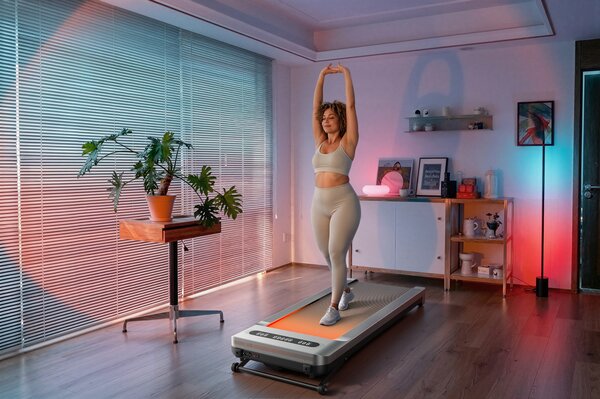
Why Walking May Be the Most Underrated Exercise on the Planet
If strength training is the foundation of a strong, healthy body after 40, walking may be its perfect partner.
Walking may not be the most glamorous form of exercise, but it is one of the most effective. In a fitness culture that often celebrates intensity, many women are surprised to learn that one of the best things they can do for their health is something as simple as putting one foot in front of the other. Walking requires no special equipment, no gym membership, and no advanced fitness level. Yet its benefits are profound.
Unlike high-intensity cardio exercises, walking places relatively little stress on the body while still delivering meaningful cardiovascular and metabolic benefits.
It improves circulation, supports heart health, increases daily energy expenditure, enhances recovery, and helps regulate blood sugar levels. It also provides something many women need more of in midlife: a healthy way to manage stress.
Elevated cortisol can influence everything from abdominal fat storage to cravings, recovery, sleep quality, and energy levels. While intense exercise can sometimes add to an already stressed system, walking often has the opposite effect! It encourages movement without overwhelming the nervous system, making it one of the most sustainable forms of exercise available.
One of walking’s most powerful benefits is its ability to support blood sugar regulation after meals.
Every time muscles contract, they help pull glucose out of the bloodstream and into muscle cells where it can be used for energy or stored for later use. Even a 10- to 15-minute walk after lunch or dinner can help support a steadier blood sugar response and improved insulin sensitivity over time. For women concerned about weight management, energy, insulin resistance, or healthy aging, this simple habit can become one of the easiest and most effective metabolic tools available.
Walking also complements strength training beautifully. While strength training helps build and preserve lean muscle mass, walking supports cardiovascular fitness, circulation, recovery, and overall daily activity levels.
Together, they create a powerful foundation for long-term health and healthy aging.
One of the most surprising things I see with clients is that replacing excessive cardio with regular walking often helps break stubborn weight-loss plateaus! Women who have spent years believing they need to push harder frequently discover that their bodies respond better when they focus on consistency rather than exhaustion.
Walking also offers benefits that extend beyond physical health. A daily walk can improve mood, reduce anxiety, increase mental clarity, and provide a valuable opportunity to disconnect from screens and reconnect with yourself. Whether it is a morning walk to start the day, a walk after meals to support blood sugar regulation, or an evening walk to unwind, these small habits can have a significant impact over time.
The beauty of walking is that almost everyone can do it.
You do not need to be an athlete, own expensive equipment, or belong to a gym. You simply need to move.
For most women, a brisk 30- to 45-minute walk on most days of the week is an excellent goal. If that feels overwhelming, start with 10 minutes and build from there. The body responds remarkably well to consistency, and the cumulative effect of daily movement is often far greater than most people realize.
Walking may not feel revolutionary, but for many women after 40, it can be transformational.
The Rise of Metabolic Workouts
If strength training is the foundation and walking is its perfect partner, metabolic workouts may be the bridge that brings everything together.
For years, fitness programs treated strength training and cardiovascular exercise as completely separate activities.
You lifted weights to build muscle. You did cardio to burn calories. The two existed in different worlds, often performed on different days and for different reasons.
Today, we understand that some of the most effective workouts combine elements of both.
Metabolic resistance training blends strength-based movements with purposeful pacing, creating workouts that challenge the muscular and cardiovascular systems simultaneously! Rather than choosing between strength and cardio, women can experience the benefits of both in a single session.
This approach is particularly effective after 40 because it addresses many of the physiological changes that occur during midlife.
Metabolic workouts help preserve lean muscle mass, improve insulin sensitivity, support cardiovascular health, increase energy expenditure, and enhance overall functional fitness. In other words, they help train the body for real life.
Unlike traditional cardio, which focuses primarily on burning calories during the workout itself, metabolic workouts continue delivering benefits long after the session ends..
Exercises such as squats, lunges, step-ups, rows, presses, carries, and core movements challenge strength, balance, coordination, and endurance at the same time. These are not simply gym exercises. They are movement patterns that support everyday activities, from carrying groceries and climbing stairs to lifting luggage and playing with grandchildren.
One of the reasons I love metabolic training for women over 40 is that it respects reality.
Most women are balancing careers, families, businesses, aging parents, social commitments, and countless daily responsibilities. Spending two hours in the gym is rarely practical. Metabolic workouts allow women to build strength, support heart health, and improve body composition in a fraction of the time.
Fitness stops being about shrinking the body and starts becoming about supporting it.
The question is no longer, “How many calories did I burn?”
The better question becomes, “How much stronger, healthier, and more capable am I becoming?”
For women over 40, that shift in mindset can change everything.
The New Cardio Playbook: What to Do and What to Avoid After 40
What does effective exercise actually look like in practice?
For most women, it begins with building a routine that supports strength, cardiovascular health, mobility, recovery, and long-term metabolic health.
1- Strength Training
Strength training should serve as the foundation. Whether performed with bodyweight, resistance bands, machines, or free weights, resistance training helps maintain muscle, strength, bone density, and metabolic health.
2- Walking
Walking deserves a regular place in the routine.
It supports heart health, circulation, stress management, recovery, and blood sugar regulation while placing relatively little stress on the body.
3- Metabolic Resistance Training
Metabolic resistance training adds another valuable layer by combining strength-based movement with cardiovascular conditioning. For women with limited time, this can be one of the most efficient ways to train because it improves overall fitness while supporting muscle, metabolism, and heart health in the same session.
4- Mobility and Flexibility Training
Mobility and flexibility training should not be overlooked. Healthy aging is not only about building strength. It is also about maintaining the ability to move well.
Spending a few minutes each day improving flexibility, mobility, and range of motion can support posture, balance, recovery, and overall function.
This approach replaces the outdated belief that more cardio is always better. Long cardio sessions, calorie chasing, and exhaustion-based exercise are no longer the gold standard for health, fitness, or weight management for women over 40.
The most effective fitness plan is one that supports your body, improves your health, and can be sustained consistently for years to come.
That is a goal worth training for.
Your Ideal Weekly Fitness Plan After 40
The good news is that an effective fitness plan does not need to be complicated or time-consuming. Once the right pieces are in place, consistency becomes much easier.
A balanced weekly routine might look like this:
- Strength Training or Metabolic Resistance Training: 3–4 days per week
- Walking: Most days of the week
- Mobility or Stretching: 5–10 minutes daily
- Recovery Focus: At least one intentional recovery day each week
Strength training and metabolic resistance workouts can be alternated throughout the week depending on schedule, energy, and recovery. Walking can be done on training days or non-training days, making it one of the easiest ways to stay consistent without adding more stress to the body.
What matters most is not creating a perfect plan.
It is creating one that supports your body, fits your lifestyle, and can be sustained consistently.
That is where lasting results are built.
A Simple 20-Minute Metabolic Reset Routine You Can Do Anywhere
For beginners, the best starting point is often a routine that feels simple, approachable, and realistic.
The LM Elite Physique 20-Minute Metabolic Reset is a bodyweight routine designed to help build strength, support metabolic health, and improve overall fitness. It can be performed almost anywhere and requires little to no equipment.
As the movements become easier, gradually adding dumbbells, bands, or other strength-training exercises helps continue building muscle, supporting bone density, improving insulin sensitivity, and increasing strength over time.
Summing Up
One of the most liberating discoveries after 40 is realizing that your body is not asking you to work harder. It is asking you to work smarter.
As women move through midlife, the rules of cardio change. Muscle, bone health, insulin sensitivity, energy, recovery, and long-term vitality all matter more than simply burning calories.
This is why walking, strength training, and metabolic workouts have become such powerful tools for women over 40: they support the body in the ways it needs most now.
There is something deeply empowering about that shift. When you begin training in a way that honors what your body needs, it becomes more than exercise. It becomes an act of self-respect.
And that self-respect builds confidence far beyond fitness.
Life after 40 is not about trying to become who you used to be. It is about stepping forward with greater wisdom, strength, vitality, confidence, and a deeper understanding of what your body needs to feel and perform at its best.
And when you begin giving it exactly that, you may discover that your strongest, healthiest, and most vibrant years are not behind you at all… they are just beginning.
About the Author
Linzi Martinez, CPT, INHC, BA, is an Integrative Nutritional Health Coach, Certified Personal Trainer, author, television host, and award-winning television producer.
She is the founder of LM Elite Physique, a concierge fitness and nutrition program specializing in helping women over 40 improve their health, balance hormones, build lean muscle, boost metabolism, and achieve sustainable weight loss through science-based nutrition and personalized fitness strategies.
Linzi is also the host and producer of the national health and wellness television show Oasis: The Palm Beaches on the Travel Channel. Known for her practical, compassionate approach, she has helped hundreds of women transform their health by focusing on the root causes of weight gain and metabolic dysfunction rather than relying on outdated fitness methods.
Her work has been featured by major media outlets including ESPN, NBC, CBS, ABC, FOX, Discovery Channel, and Apple TV. Linzi is the author of Recipes for Instant Weight Loss and a regular contributor on topics related to healthy aging, metabolism, hormones, fitness, and nutrition for women over 40.
Disclaimer
The Content is not intended to be a substitute for professional medical advice, diagnosis, or treatment. Always seek the advice of your physician or other qualified health provider with any questions you may have regarding a medical condition.
Disclaimer: This story is auto-aggregated by a computer program and has not been created or edited by evesfit.
Publisher: Source link