
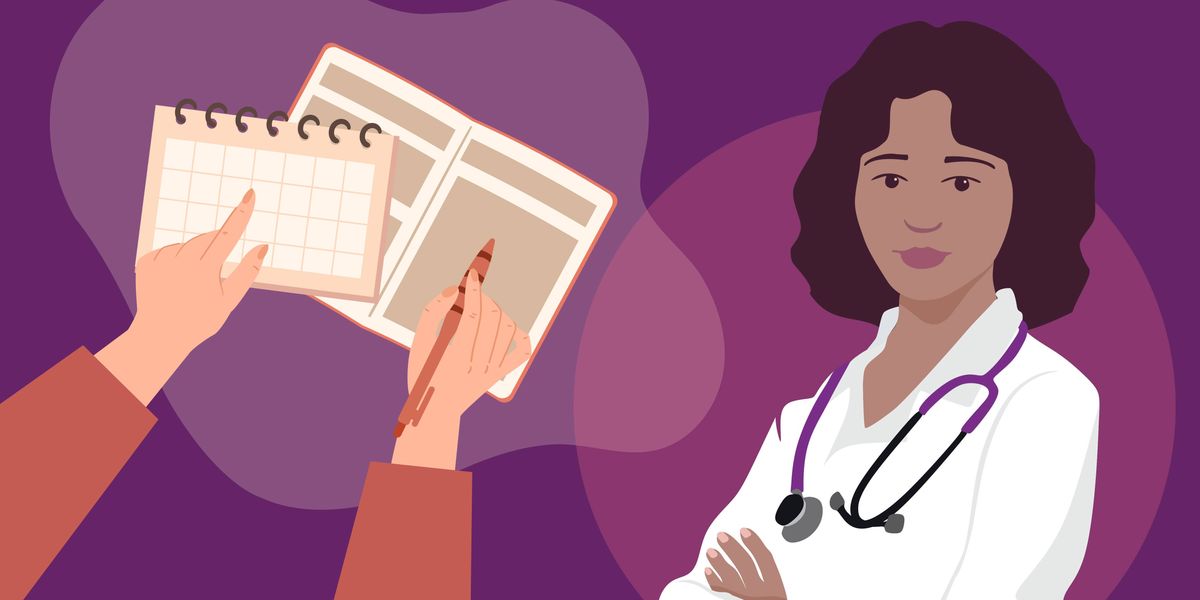
Talk to your clinician
3 out of 10 women in the U.S. have overactive bladder (OAB).
OAB causes issues with peeing, can worsen your quality of life and won't go away on its own.
Without treatment, OAB symptoms may become more difficult to manage. Talking to your clinician is important.
Start with symptoms
Not everyone experiences OAB symptoms in the same way.
Your clinician needs to know your experience so they can help. Make a list of your symptoms and how much they affect you before your appointment.
Keep a diary
Prepare for your appointment by keeping a bladder diary.
Include:
- How much you drink
- How often you pee
- How much you pee
- If you experience the urgent need to pee
- If you leak pee
You can use a notebook or print out a bladder diary you can find online.
Log what you can
Keep a bladder diary for three to seven typical days.
The days don’t have to be in a row, and it’s OK if you miss some entries during the day.
List your meds
Make a list of:
- Medications you take
- Prescription drugs
- Over-the-counter medications
- Vitamins or supplements
- Your medical history
- Diagnoses
- Conditions
- Surgeries
- Family history
Bring a friend
It can feel uncomfortable to talk about OAB, but your clinician is there to help. Your appointment is the best place to start getting answers and treatment.
You can bring a trusted friend or family member to support you and help you remember what to say and ask.
Ask for options
Some groups face more challenges than others with OAB. Some women, including those from underserved communities, may face additional challenges accessing care and treatment for OAB.
When you talk to your clinician, ask about all the options:
- Medication
- Minimally invasive treatments
- Physical therapy
- Behavioral therapy
- Help accessing what you need
Start the conversation
Ready to bring it up? Here are some simple ways:
I want to talk about bladder issues today.
I want to discuss overactive bladder symptoms.
Can we talk about OAB?
I'm having some symptoms I want to talk about.
I want to talk about bladder health.
Get answers you need
Here are some questions to ask your clinician:
Can you help me with OAB?
Do I need to have tests?
What are my treatment options?
What changes can I make to help my symptoms?
Would physical therapy help?
What's next?
Speak up for yourself. Getting help for OAB starts here.
Resources
National Association For Continence - Symptom Screening Tool
The Urology Foundation - Bladder Diary
This educational resource was created with support from Sumitomo Pharma America, Inc.
Disclaimer: This story is auto-aggregated by a computer program and has not been created or edited by evesfit.
Publisher: Source link