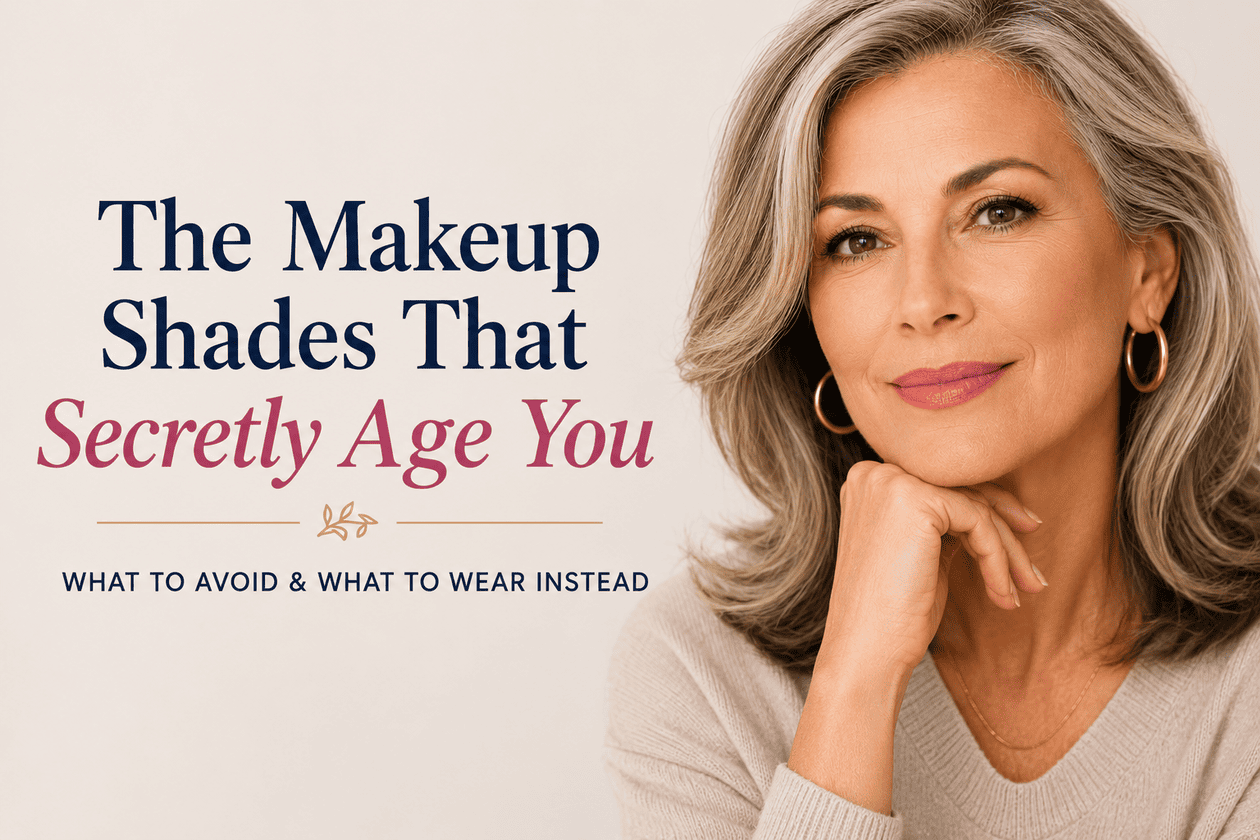
Have you ever put on your makeup, looked in the mirror, and thought, Why do I suddenly look so tired? You got enough sleep. You used your favorite moisturizer. You even remembered to blend your foundation down your neck. Yet somehow, something still feels…off.
The culprit may not be your technique.
It may be the color. As we get older, our skin changes in ways we don’t always notice from day to day. Our undertones shift, our lips lose some of their natural pigment, our eyebrows lighten, and our eyes aren’t quite as bright as they used to be. The makeup shades that looked amazing in our 30s can suddenly make us look washed out, harsh, or older than we actually are.
The good news?
You don’t need to throw away your entire makeup bag. Sometimes swapping just one or two shades can make you look fresher, healthier, and more awake.
Let’s talk about the colors that may be quietly adding years to your face and what to wear instead. Disclosure: This post contains affiliate links.
Jet Black Eyeliner
Black eyeliner has long been considered a makeup staple. The problem is that as we age, a harsh black line can overpower softer facial features. Our lashes naturally become thinner over time, and the skin around our eyes loses some firmness.
A thick black line can emphasize both of those changes rather than disguise them.
Instead, try softer shades like espresso brown, charcoal, deep plum, or navy. These colors still define the eyes but create a much softer, more flattering effect.
If you love a dramatic look, keep the black mascara but swap the liner. You’ll be surprised how much brighter your eyes appear.
Products to try:
Frosted Lipsticks
If you wore frosted lipstick in the ’70s, ’80s, or ’90s, welcome to the club. We all did.
Unfortunately, shimmer isn’t always our friend anymore. Frosted finishes tend to settle into lip lines and reflect light in a way that can make lips appear drier and thinner. Since lips naturally lose volume with age, the effect isn’t usually flattering.
Today’s satin, cream, and hydrating formulas create a much fuller, healthier appearance. Look for shades like rosewood, warm pink, peachy nude, soft berry, or muted coral.
These colors mimic the natural flush of healthy lips.
Products to try:
Chalky Nude Lipsticks
Not all nude lipsticks are created equal. Many of the pale beige nudes that were popular over the last decade remove all the natural color from mature lips. The result can make you look tired—or worse, like you’ve accidentally erased your mouth.
Instead of matching your foundation, choose a nude that’s close to your natural lip color but just a little richer. Think pink nude, rosy beige, caramel nude, or warm mauve.
If you’re unsure, your best nude is usually about one shade deeper than your bare lips.
Dark Matte Lipsticks
Deep burgundy, chocolate brown, and nearly black lipsticks certainly make a statement. Unfortunately, they can also make lips appear noticeably thinner.
Matte formulas absorb light rather than reflect it, emphasizing dryness while making lips look less full.
If you love darker shades, choose hydrating cream formulas instead of flat mattes. A touch of gloss in the center of the lips also creates the illusion of fullness without looking overly shiny.
Cool Gray Eyeshadow
Gray eyeshadow can look sophisticated on the palette, but on mature skin it often competes with natural shadows around the eyes. As we age, slight hollows and discoloration around the eye area become more noticeable.
Cool gray shadows can accidentally exaggerate those shadows instead of disguisishing them.
Warmer shades tend to be much more forgiving. Soft taupe, warm bronze, champagne, caramel, rosy brown, and muted plum all create definition while making the eyes appear brighter.
Beautiful mature-friendly palettes include:
Heavy White Under-Eye Concealer
Many of us were taught to use concealer that’s two or three shades lighter than our skin. On social media, it looks great under bright studio lights. In real life, it often highlights fine lines and creates obvious contrast under mature eyes.
Choose a concealer that’s only about one shade lighter than your skin tone. The goal is correcting darkness, not creating a bright white triangle.
Hydrating formulas also tend to settle less into fine lines than matte concealers.
Bright White Highlighter
A blinding white highlighter may look beautiful on a 22-year-old influencer. On mature skin, it can emphasize texture, enlarged pores, and fine lines.
Instead, choose finely milled highlighters in champagne, soft gold, rose gold, or peach. These shades give skin a healthy glow without announcing themselves from across the room.
Remember, glow is good. Glitter is another story.
Cool Pink Blush
Bright blue-based pink blushes can sometimes look disconnected from mature skin tones. Because our skin often becomes slightly warmer or loses natural rosiness after menopause, those icy pink shades don’t always blend naturally.
Instead, try peach, apricot, warm rose, terracotta rose, or soft coral. These shades mimic the healthy flush we naturally lose with age.
Apply blush slightly higher on the cheekbones rather than directly on the apples of the cheeks for a subtle lifting effect.
Beautiful options include:
Brows That Are Too Dark
One of the quickest ways to unintentionally age yourself is using eyebrow products that are much darker than your hair.
As our hair naturally lightens and softens, overly dark brows can appear severe.
Instead, choose a brow pencil or powder that’s one shade lighter than you think you need if you have dark hair, or one shade darker if you have very light gray or silver hair. The goal isn’t creating Instagram brows. The goal is softly framing your face.
Foundation That’s Too Matte
Technically, this isn’t a shade issue, but it deserves a place on the list. Many women continue buying the exact same foundation they wore in their 30s.
As skin becomes drier with age, ultra-matte foundations can emphasize texture, flakes, and wrinkles while making the complexion appear flat.
Look for words like:
- Radiant
- Luminous
- Natural finish
- Hydrating
- Serum foundation
These formulas reflect light in a much more flattering way.
Don’t Forget That Your Skin Tone Changes
One of the biggest mistakes women make is assuming they’re still the exact same shade they were twenty years ago.
After menopause, reduced sun exposure, changes in pigmentation, and natural aging can all alter your skin tone.
That foundation you’ve bought for years may no longer be your best match. If it’s been a while, stop by a beauty counter or Sephora and have your shade professionally matched again. You might be surprised by how much better your makeup looks with the right undertone.
The Bottom Line
Makeup isn’t about hiding your age. It’s about enhancing your features and helping you look like the healthiest, most rested version of yourself.
Often, the biggest difference doesn’t come from buying expensive products or learning complicated techniques.
It comes from choosing colors that work with the skin you have today instead of the skin you had twenty years ago.
Think softer instead of harsher. Hydrating instead of drying. Warmth instead of flatness. Those small changes can brighten your complexion, make your eyes sparkle, and help your makeup look effortlessly modern.
Disclaimer: This story is auto-aggregated by a computer program and has not been created or edited by evesfit.
Publisher: Source link